The Caspian and the tower
Waves once beat against its very foot — and the sea did much to shape the tower's fate.
The tower stood by the water
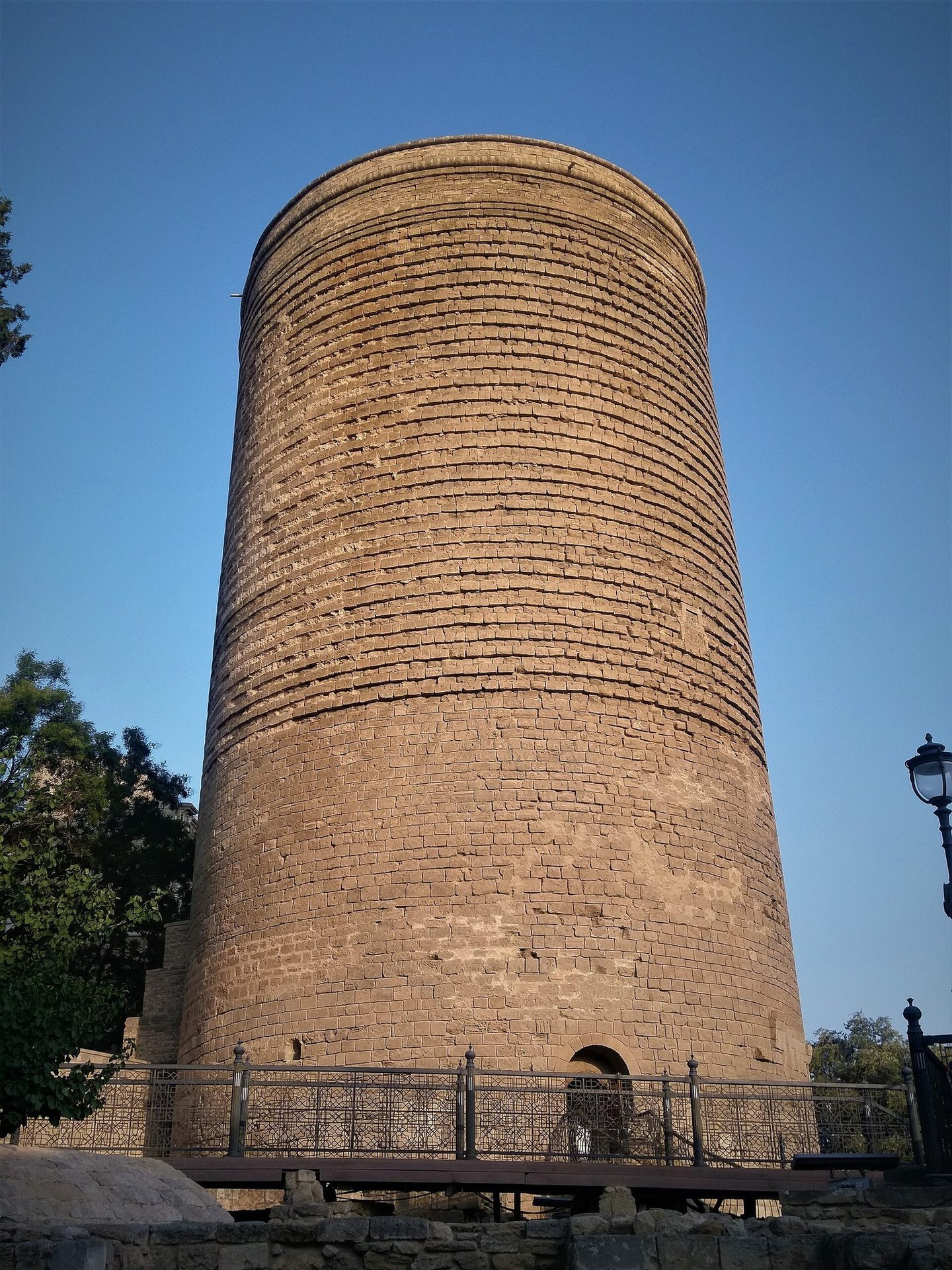
Today the Seaside Boulevard and the quarters of the Old City lie between the Maiden Tower and the shore. But it was not always so: when the tower was built, the Caspian reached its very foot and the waves struck the stone. Old drawings and engravings show the tower right at the water's edge.
The Caspian Sea has no link to the ocean, and its level has changed greatly over the centuries. As the sea retreated, a strip of land was exposed at the tower's foot — and it was on this land, in the 9th–15th centuries, that the city walls and the Shirvanshahs' Palace rose. So the Caspian's fluctuations literally created the Old City.
The well inside the tower
Despite the nearness of the salt sea, inside the tower is a well about 21 metres deep reaching a freshwater aquifer; ceramic pipes 30 cm across led to it. It is seen both as a source of drinking water and as a rainwater-harvesting system for times of siege.
A buttress towards the sea
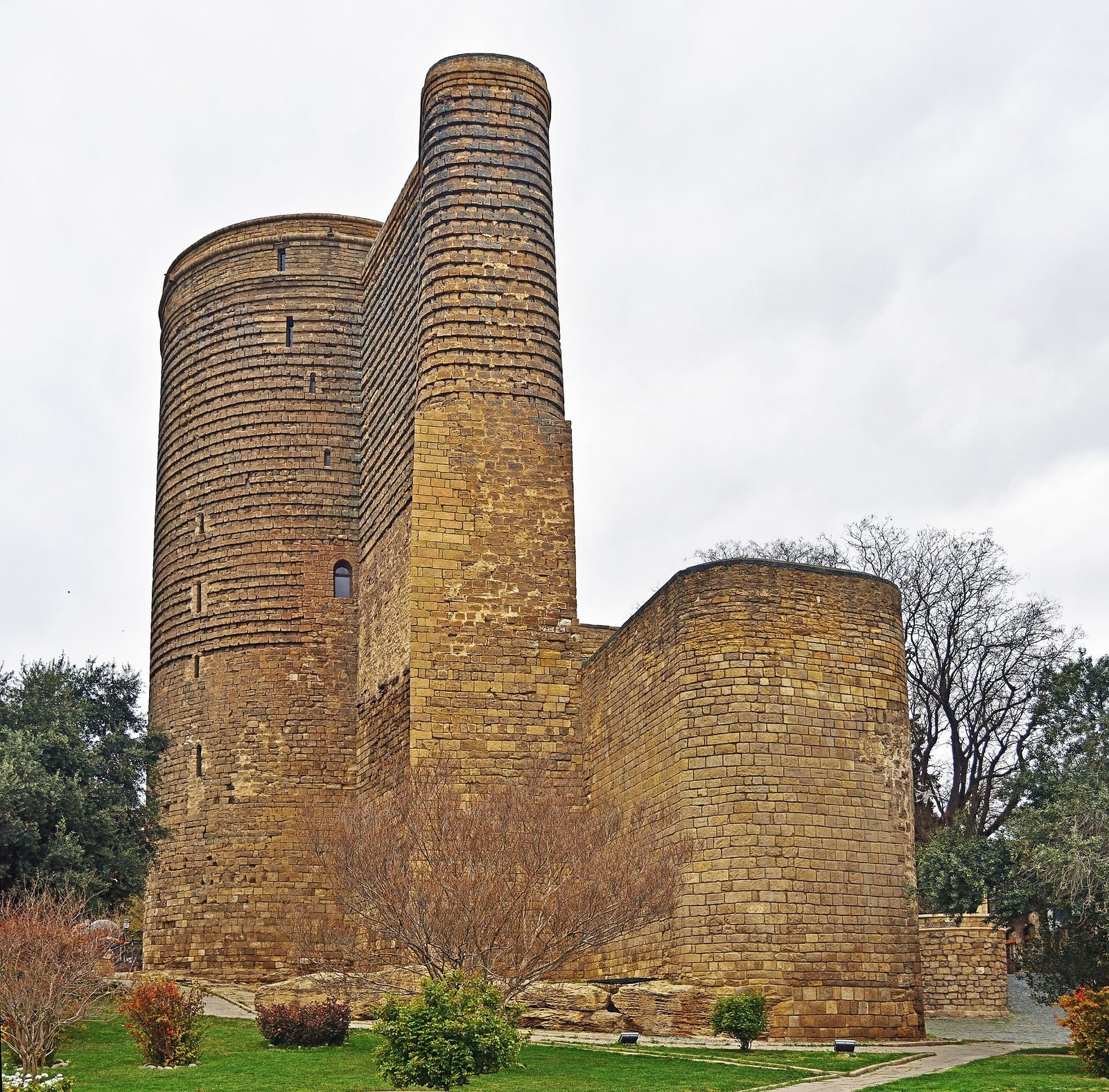
On the eastern side a massive stone buttress of unusual shape adjoins the tower. Some see it as a support that absorbs the waves and lends stability; others as a wharf or a marker aligned with the point of sunrise. Its purpose is one more unsolved detail.
The sea withdrew, the tower remained
Today the Caspian's level is falling again, and the tower stands far from the water, ringed by the city. Yet it was the sea that gave it life, its name in the legends and its very form — without the Caspian the Maiden Tower would be different.